
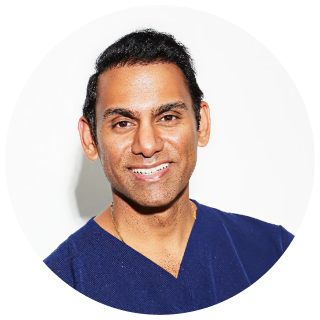
By Dr. Arnold Mahesan
Fertility SpecialistBeverly Hills Babies
Dr. Arnold Mahesan is a board-certified fertility specialist with extensive experience in IVF, fertility treatment, and gestational surrogacy. He is committed to helping intended parents navigate their journey with personalized care and expert guidance
Choosing an egg donor involves a personal connection to a profile and a clinical evaluation of whether the proposed donation makes sense. Appearance, background and interests may influence your preferences. Medical history, genetic screening and the structure of the egg arrangement influence the treatment plan.
My priority is to help you understand both parts before a donor choice becomes a commitment.
1. Start with your family goals
Decide whether you are planning for one child, future siblings or embryos from both fathers. These goals can change which egg arrangement is suitable. A limited group of frozen eggs may serve a different purpose from a retrieval arranged specifically for your family.
With frozen eggs, the number available is established, but the number that will survive thawing and develop into embryos is still uncertain. With a planned retrieval, the egg yield itself remains uncertain. Neither option guarantees a particular number of children.
2. Review the donor’s medical information
Age, relevant health history and prior treatment records help inform the discussion. If the donor has completed previous retrievals, those records may be useful, but another cycle may have a different outcome.
Family history also matters. A profile should not be interpreted as a complete medical assessment simply because it is detailed or attractively presented. Ask what information has been verified, what screening is complete and what remains to be done.
3. Understand genetic carrier screening
Many healthy people carry a genetic variant associated with an inherited condition. A carrier result does not automatically make someone an unsuitable donor. Its relevance depends on the condition, inheritance pattern and the results of the sperm source.
If both fathers will contribute sperm, the donor’s findings need to be assessed against each father’s results. Genetic counseling can clarify a significant overlap or another concerning result. Screening reduces some risks but cannot rule out every genetic or developmental condition.
4. Clarify identity and future contact
Understand whether the arrangement involves a known donor, an identity-release donor or another type of relationship. Ask what information can be shared with your child, how medical updates are handled and what expectations exist for future contact.
Absolute anonymity cannot be assumed in an era of consumer DNA testing. Even a donor who does not plan direct contact may later be identifiable. Consider how you would explain the arrangement to your child as they grow.
5. Avoid promises that a profile cannot make
A donor’s education, interests or achievements can be meaningful to you, but they do not predict a child’s personality or future performance. A thoughtful choice leaves room for your child to become their own person.
Before selecting, ask for a review of the donor’s clinical records, the egg arrangement, the genetic-screening comparison and the options for future siblings. Fathers First™ can help you make that decision within the larger family-building plan.